Healthcare
Improving Rural Healthcare in India: Reaching Underserved Populations
15th May 2026
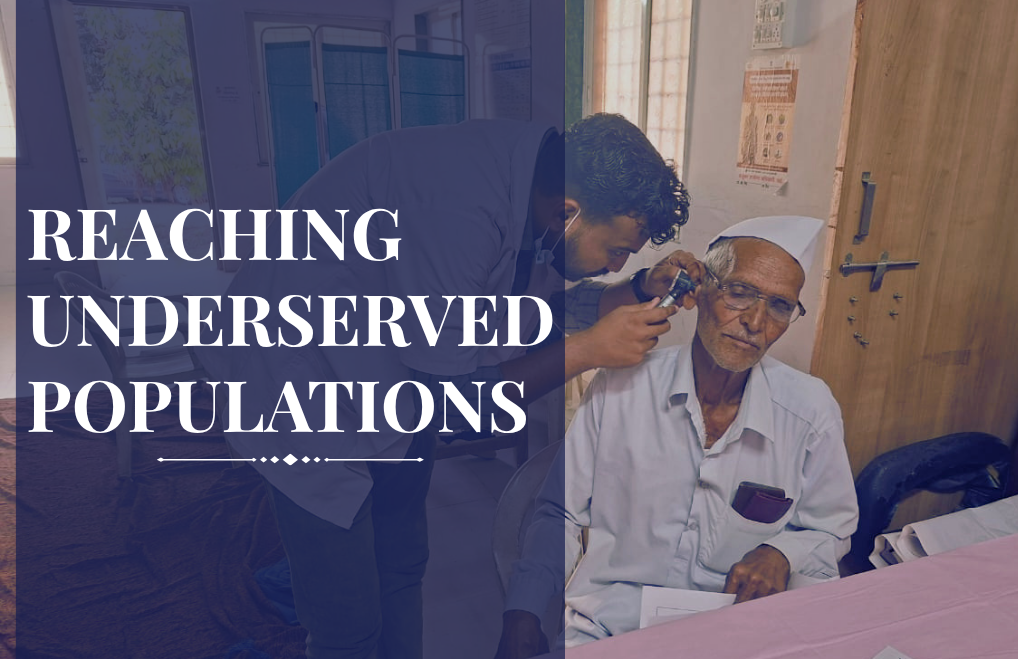
In the quiet stretches of rural India, access to medical care is often determined by the ticking of a clock. For many communities, reaching even basic clinics requires travelling long hours, a delay that can turn a treatable ailment into a life-altering crisis.
Despite our nation’s progress, these geographic gaps define the daily reality for millions. At Mukul Madhav Foundation (MMF), we believe the core of rural healthcare in India isn’t just about the presence of a building; it is about whether a mother can find help for her child when it matters most.
We work to close this distance through community-led solutions that bring healing closer to home. Strengthening healthcare access in rural areas is about more than just infrastructure; it is about ensuring timely, reliable, and dignified support for every member of our community.
Bridging the Systemic Divide
This disparity in care reflects a deeper, structural challenge. While urban centres benefit from concentrated resources, those living in remote regions continue to face an uneven distribution of specialised support. These challenges in rural healthcare in India often force families to spend their modest savings on travel or private consultations, leading many to delay seeking help until a condition becomes critical.
In our work on the ground, we see that preventive care is often overlooked—not due to a lack of will, but because of economic constraints. Overcoming this requires more than isolated interventions; it requires empathetic bridges—integrated rural health programs that address the social factors alongside medical ones, ensuring no one is left behind.
National Infrastructure vs. Functional Reality
At a national level, the numbers show significant progress. India’s network of over 1.6 lakh subcentres and 31,000+ Primary Health Centres (PHCs) is designed to deliver primary healthcare services to the heart of the country. However, the mere existence of a structure does not always translate into effective treatment for the local population.
Data indicates that only about 30% of PHCs have the full infrastructure required to function at capacity. Mukul Madhav Foundation addresses these functional gaps by bringing healthcare for underserved populations directly to their doorstep. By complementing existing healthcare schemes in India with targeted on-ground action, we ensure that “access” becomes a lived reality rather than just a statistic.
Community-Led Interventions and Early Diagnosis
Through specialised camps and local screenings, we enable early diagnosis in regions where preventive care is often missing. Whether it is blood screenings for conditions like thalassaemia or diabetes, these initiatives shift the focus from reactive treatment to proactive wellness. These rural development programs in India reduce the long-term economic burden on families, ensuring that even the most remote villages are included in the benefits of modern healthcare services in India.
Specialised Care
The lack of advanced medical facilities in rural India remains one of the most critical hurdles for families. Because specialised treatments are often concentrated in metropolitan hubs, they remain out of reach for the poor. To address this, MMF partnered with global organisations like Healing Little Hearts (UK) to conduct paediatric cardiac surgery camps.
Since 2014, this collaboration has supported over 850 life-saving heart surgeries. For these children, who once struggled for every breath, the intervention is a second chance at life.
This support extends to long-term complex conditions through our Mission Cerebral Palsy initiative. In our rehabilitation centres in Ratnagiri and Satara, we provide the neuro-rehabilitative care that standard healthcare facilities in India often lack. It is in these centres that we witness the quiet victory of a child taking their first step after months of therapy—a moment that proves a diagnosis at birth does not have to be a lifelong limitation.
A Vision for an Equitable Future
The obstacles facing our rural communities are complex, but they are not beyond resolution. To truly strengthen the system, we must move beyond the construction of buildings and focus on the continuity of care. Meaningful change lies in making medicine reliable, inclusive, and reachable at the “last mile”.
MMF’s work reflects this belief. By enabling life-saving surgery for a “Little Heart” or supporting the steady progress of a child in rehabilitation, we are doing more than providing a service.
This World Health Day, let us remember that health is a fundamental right. Through dedicated philanthropic efforts and integrated systems, a healthier, more dignified future for all is well within our reach.