Education
Scholarships in India: Closing the Distance Between Merit and Money
04 Sept 2026
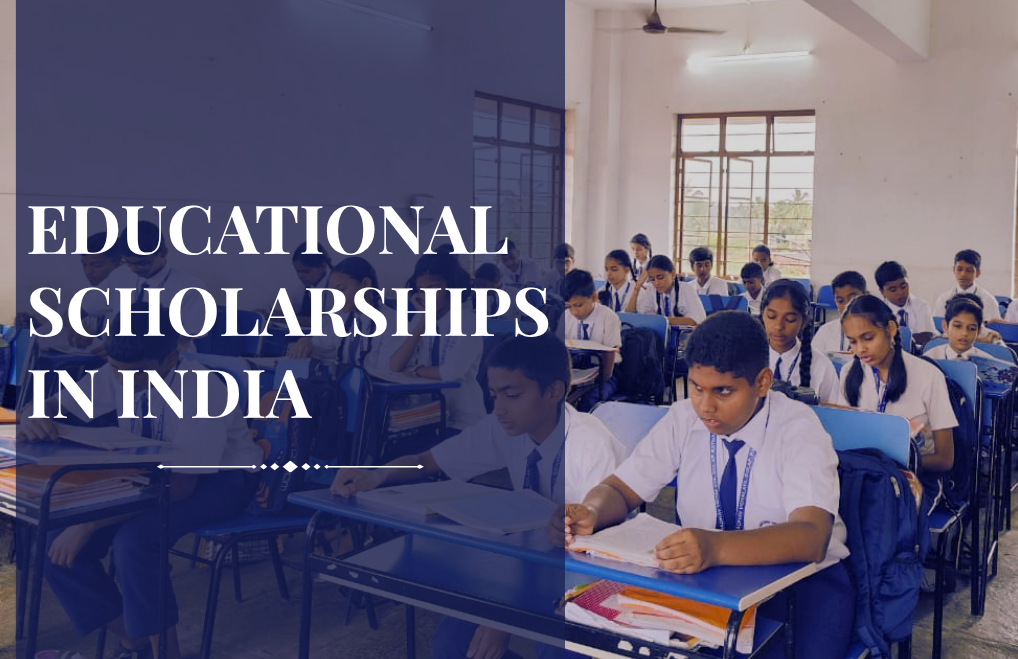
A student in rural Maharashtra clears her board exams with marks good enough for an engineering seat. The admission letter arrives, but so does the fee structure, and for a family that survives on daily wage labour, that single sheet of paper can undo years of hope in one glance. She has spent years memorising formulas and solving problem sets by lamplight, and none of that effort shows up on the fee receipt.
This is the moment where India’s education story splits in two, the students who go on to college, and the ones whose talent simply runs out of runway.
At Mukul Madhav Foundation (MMF), we have come to see scholarships for students in India less as a one-time fund and more as a bridge, the thing that carries a child from what they have earned academically to what they can actually afford. Merit alone rarely survives poverty. It needs something to stand on.
A scholarship, at its simplest, is that standing ground, the thing that turns a marksheet into an actual seat in a classroom.
The Gap Between Talent and Access
India produces some of the sharpest young minds in the world, yet financial aid for students in India remains out of reach for a large share of them. Course fees, hostel costs, books, and even the daily commute can price a deserving student out of their own future, long before a single exam is written.
According to UDISE+ data from the Ministry of Education, secondary-level dropout numbers stood at 42.7 lakh students in 2024-25, and financial constraints remain one of the leading reasons cited for children leaving school before completing their education.
For many families, the decision is not whether their child is capable, but whether the household can absorb one more year of school fees, books, and lost help at home.
This is where the distinction between merit based scholarships in India and need based scholarships in India starts to matter. Merit opens doors, but need decide whether a student can walk through it. A truly effective scholarship model has to account for both, rewarding academic promise while removing the financial wall in front of it.
Without this balance, scholarships risk rewarding only those who already had enough support to perform well, while overlooking the student who is equally capable but starting from further behind.
For first-generation learners, tribal girls in residential hostels, or a young woman from a leprosy-affected family applying for nursing college, the barrier is rarely ability. It is almost always access, the absence of someone willing to say, we will cover the fee, now go and study.
This is why the design of a scholarship matters as much as its size. A fund that only looks at marksheets will keep finding the same kind of student, one who already had some cushion at home. A fund that also looks at circumstance finds the student who has no cushion at all, and often has the most to prove.
Our Work on the Ground
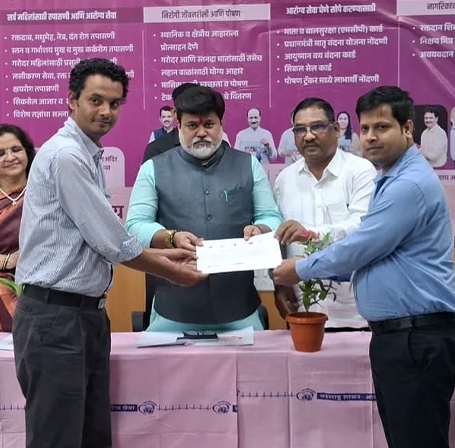
- Through education scholarships in India at ten agriculture colleges across Maharashtra under the Mohini Pralhad Chhabria Scholarship, we support students pursuing degrees in agriculture, many of them first in their families to attend college, many of whom would otherwise have had no path into higher agricultural study at all.
- We partnered with the Rashtriya Bal Kalyan Sanstha in Jhadol, Rajasthan, and continued support for 260 tribal girls and 46 staff members at a residential hostel, ensuring education and welfare go hand in hand so that a girl’s schooling is never interrupted by a lack of basic security or support.
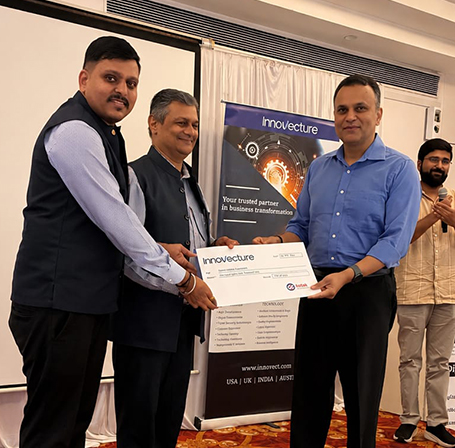
- With the Udayan Trust, we fund scholarships for children from leprosy-affected families, and with COEP and Pune Technological University, we support engineering aspirants who would otherwise be priced out of the field, ensuring that financial hardship does not decide who gets to become an engineer.
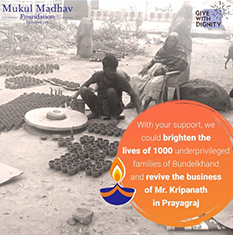
- Through our tie-up with ITI Kendrapada, Odisha, we funded vocational training in plumbing, opening a direct path to employment for students seeking scholarship programs for students in India beyond the traditional degree route, and giving them a trade-based route to independence that did not rely on a four-year degree.
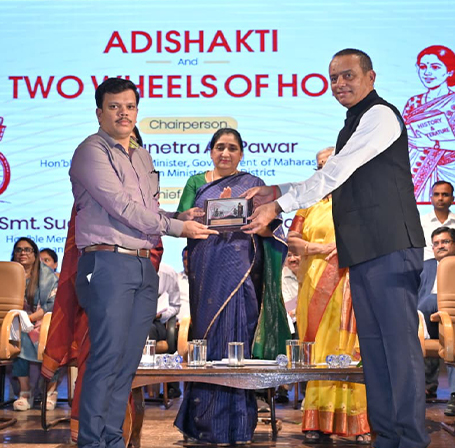
- At the school and undergraduate level, our scholarship schemes for students in India supported students across diverse educational pathways, from BSc Agriculture and other undergraduate streams to primary and secondary education. Through the Late SMT Mohini Pralhad Chhabria Scholarship, we supported 55 BSc Agriculture students and 35 students across different streams, while the Sanjay Hinduja Scholarship provided ₹60,000 each to 11 MTech students since 2024–25. The Daily Appeal Scholarships under MMF supported more than 100 students since April 2026, while MMV supported 42 students every year through their primary and secondary education—creating opportunities for students to continue their education regardless of their chosen path.
Why NGOs Remain Central to This Work
Government scholarship schemes exist, but they move slowly, and eligibility criteria often exclude the very students who need help the most. This is the space where NGOs supporting education in India step in, not as a replacement for public policy, but as the flexible layer that can respond to an individual student’s circumstances rather than a rigid formula. An NGO scholarships for students model can look at a single child’s story, a father lost to illness, a family with no steady income, and decide within weeks, not years, whether that child gets to keep learning.
That speed matters enormously in a student’s life. A gap year caused by unpaid fees can quietly turn into a gap that never closes, as circumstances at home change and the window to return to study narrows.
This is also why scholarships for underprivileged students cannot be treated as charity in the traditional sense. They are an investment in a country’s own capability, made one student at a time. A scholarship covers tuition, but what it really pays for is the version of a life that would never have existed otherwise, a first-generation graduate, a student from a rural area walking into a global classroom, a family that finally has one member who made it through.
None of this works as a one-time gesture. A scholarship that disappears after a single semester leaves a student more exposed than before. That is why our support is designed to follow a student through their course, not just through admission.
The doors of higher education are not closed to India’s poor because they lack the ability to walk through them. They are closed because no one has yet paid for the key. Every scholarship we fund is simply that – a key handed over, and a door left open long enough for a student to walk through on their own.
Data References
-
- Mukul Madhav Foundation, “Scholarships for School & College Students” – https://www.mmpc.in/our-work/education/scholarships
- Mukul Madhav Foundation, “Education” – https://www.mmpc.in/our-work/education/
- UCL, “Mukul Madhav Foundation Scholarship” – https://www.ucl.ac.uk/scholarships/mukul-madhav-foundation-scholarship
- UCL Giving, “Mukul Madhav Foundation Scholarship to support master’s student in global health and child health” – https://www.ucl.ac.uk/giving/stories/2026/jun/mukul-madhav-foundation-scholarship-support-masters-student-global-health-and-child-health
- CollegeDekho, “Mahatma Phule Krishi Vidyapeeth to offer Scholarship for Agriculture Education” – https://www.collegedekho.com/news/mahatma-phule-krishi-vidyapeeth-scholarship-agriculture-education-16594/
- UDISE+ / Ministry of Education, Government of India, “68 lakh dropouts between 2023-24 and 2024-25” (Careers360) – https://news.careers360.com/udise-plus-2024-25-analysis-68-lakh-dropouts-education-ministry-underestimate-enrolment-school-database-udiseplus-portal-report