Natural Disasters
From Emergency Response to Community Recovery : The Role of NGOs in Disaster Management
04 Sept 2026
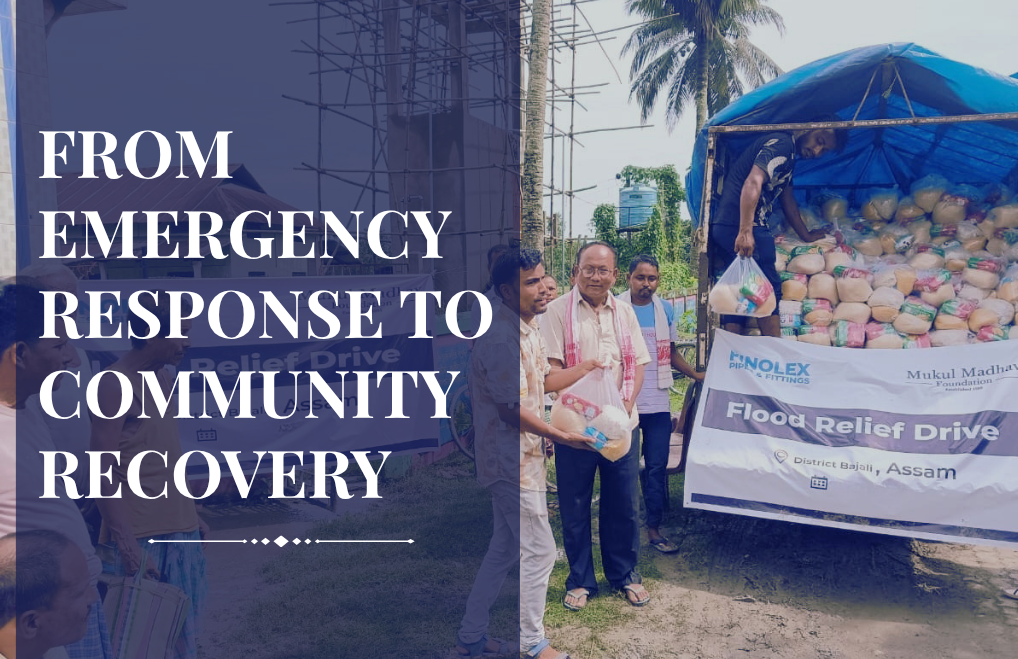
In July 2021, the rain over Konkan and Western Maharashtra did not stop for days. Rivers rose, dams released water they could no longer hold, and by the time the skies cleared, over three lakh people across a thousand villages had been pushed out of their homes.
Roads disappeared under water, phone networks failed, and entire families spent nights on rooftops waiting for a boat that may or may not come.
This is the moment when the ordinary machinery of government and infrastructure gets overwhelmed, and when the role of NGOs in disaster management becomes less about supplementing the state’s efforts and more about standing in the gap until stability returns.
At Mukul Madhav Foundation (MMF), we have learned that a disaster rarely announces itself politely. It arrives, and every plan a community had for its year is suddenly gone. A farmer’s stored grain, a shopkeeper’s stock, a child’s school books, all of it can vanish in a single night of rain.
Years of work in health, education, or livelihoods can be undone overnight by a single cyclone or flood. What we have found, again and again, is that disaster relief in India depends less on the scale of any one organisation and more on how quickly it can move once the need is known.
Speed, in these moments, is not a convenience. It is the difference between a family eating that night or not.
What Role Do NGOs Actually Play
The honest answer to what role do NGOs play in disaster relief is that they are often the first phone call and the last mile. Government machinery moves through protocol, assessment, and approval, all necessary, but slow when a family has lost its roof overnight.
Relief has to pass through layers of verification before it reaches a village, and in a crisis, those layers cost days that families do not have.
NGOs, by contrast, can mobilise within hours, drawing on existing relationships with local partners, corporates, and individual donors who trust them to act fast and act right. A truck of ration kits can be on the road before an official assessment report is even filed.
This is where the value of disaster relief organisations in India becomes clearest, not in replacing government response, but in closing the gap between when help is needed and when it formally arrives.
This is not a small distinction. In the days right after a flood or cyclone, that gap is where hunger sets in, where children fall sick from contaminated water, where the elderly and the disabled are most at risk of being forgotten. NGOs with strong local presence already know which villages are hardest to reach, which families have no one else to call, and which needs will only grow more urgent with each passing hour.
Our Work on the Ground
- During the 2021 Konkan and Western Maharashtra floods, we reached over 11,600 families across 35 villages in Mahad, Chiplun, Kolhapur, and Satara with ration kits, tarpaulins, and essential supplies, ensuring that families had food and shelter even as flood waters were still receding.
- After Cyclone Nisarga struck Dapoli and Mandangad in Ratnagiri, we distributed steel sheets, grocery kits, solar lanterns, and blankets to help families rebuild and to restore a basic sense of safety and normalcy.
- Through our response to Cyclone Phani, Cyclone Amphan, Cyclone Yaas, the Nepal earthquake, and floods across Kerala and Assam. We extended relief and rehabilitation support wherever the need arose working alongside local partners who understood each region’s specific challenges.
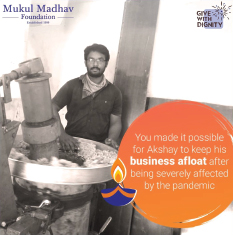
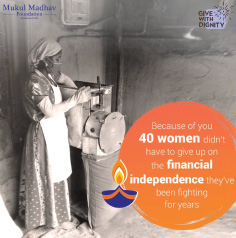
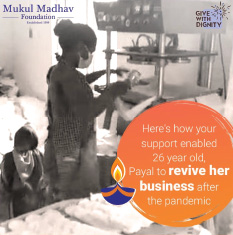
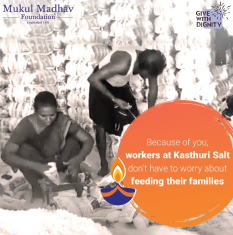
- During the Covid-19 pandemic, our teams supported hospitals with PPE, sanitisers, ventilators, and masks, while migrant workers on the road received hot meals, rations, blankets, and shoes, standing by families who had nowhere else to turn.
From Response to Recovery
Emergency relief is only the first chapter. The real test of disaster management NGOs in India lies in what happens after the news cameras leave, when a family still has no roof, no grain for the next season, and no way back to the life they had. Public attention moves quickly from one crisis to the next, but the families left behind are still rebuilding months, sometimes years, later.
This is where sustained, on-ground partnerships matter most, because rebuilding a home or a livelihood cannot be done from a distance or in a single visit. It requires local teams who understand the terrain, know the families, and can stay engaged long enough to see recovery through, not just deliver aid and move on.
Recovery is slower and far less visible than emergency response, but it is where the real difference is made. A family that receives a ration kit survives the week. A family that receives support to rebuild a home, restore a livelihood, and get children back into school recovers for good.
That is why, at MMF, our approach has never treated relief as a one-time transaction. Every rupee raised, every kit distributed, every grocery bag handed over is a promise to return, to check in, and to keep helping until a family is standing on its own again. Disasters will keep coming, some slow and some sudden, but what has always mattered is the same thing: being there quickly, staying long enough, and never mistaking a single act of aid for the end of the work.
That, more than anything else, is what defines the role of NGOs in disaster management, not just showing up when a crisis strikes, but staying until a community can stand on its own again.
Data References
- 1. India CSR, “Mukul Madhav Foundation Relief Reached Over 11,600 Flood-Stricken Families Across 35 Villages in Maharashtra” https://indiacsr.in/csr-mukul-madhav-foundation-relief-reached-over-11600-flood-stricken-families-across-35-villages-in-maharashtra/
2.Mukul Madhav Foundation, “Natural Disasters” –https://www.mmpc.in/our-work/natural-disasters - 3.UNDP India, “Guidelines on the Role of Non-Governmental Organisations (NGOs) in Disaster Management” –https://www.undp.org/india/publications/guidelines-role-non-governmental-organisations-ngos-disaster-management-sampoornananda-mohapatra-national-disaster-management
- 4.UNDP India, “Training Module for Non-Governmental Organisations on Disaster Risk Management” –https://www.undp.org/india/publications/training-module-non-governmental-organisations-disaster-risk-management-0