Healthcare
Building Better Healthcare: How NGOs Strengthen Public Health Infrastructure
18 Sept 2026
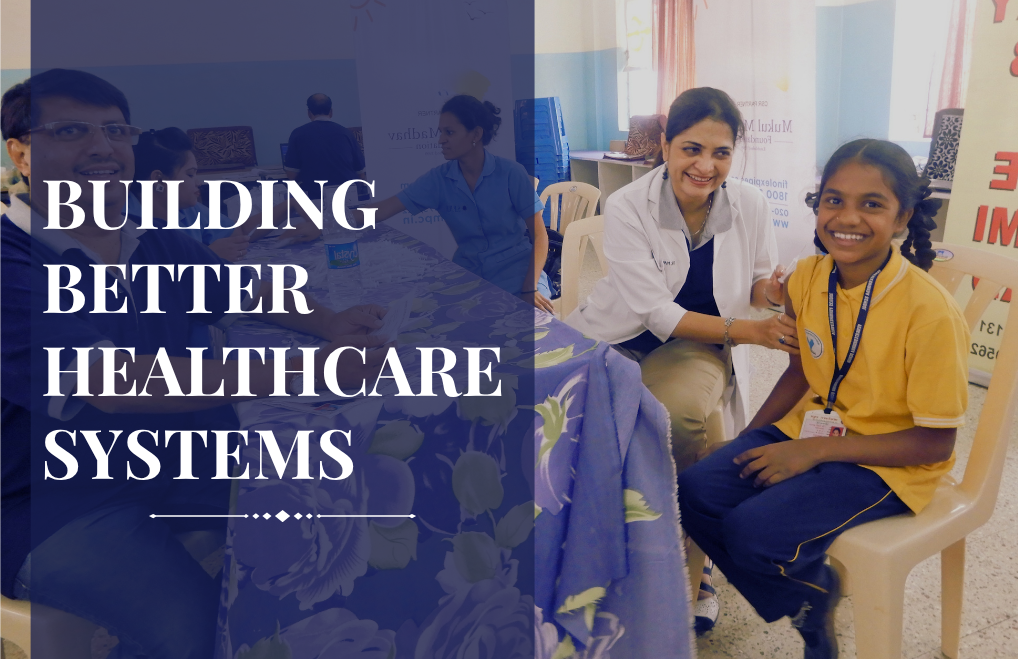
In a government hospital, a machine that stops working is not simply a broken piece of equipment. It can mean a delayed diagnosis, a family waiting weeks for a specialist appointment that should have taken days, or an overcrowded ward where a patient waits longer for care they cannot afford anywhere else. For many patients, the problem is not that healthcare does not exist. It is that the facility closest to them does not always have the equipment, specialists, or capacity to provide the care they need.
This is where the role of healthcare NGOs in India becomes important. NGOs cannot replace India’s public health system, nor should they try to. Their value often lies in strengthening what already exists, upgrading facilities, providing equipment, supporting medical personnel, and bringing institutions together to solve specific gaps.
At Mukul Madhav Foundation (MMF), we have come to see healthcare infrastructure not simply as buildings and machines, but as the foundation that allows healthcare professionals to deliver better care. Sometimes the most effective intervention is not to build another hospital. It is to make the existing one work better.
The Infrastructure Behind Healthcare Access
India has made real progress expanding healthcare infrastructure, but access to quality care remains uneven, particularly across rural and underserved communities. The World Health Organisation describes primary healthcare as the first point of contact between people and the health system, and considers it essential to universal health coverage.
A hospital needs more than beds. It needs functioning diagnostic equipment, trained personnel, reliable medical technology, specialised departments, adequate patient facilities. A diagnostic machine can mean an earlier diagnosis. A neonatal intensive care unit can mean a premature baby getting specialised care close to home instead of a long journey to another city. A dialysis unit can mean a patient avoiding repeated travel just to receive treatment they need every week. This is why healthcare infrastructure in India has to be viewed as part of healthcare access itself, not separate from it.
Why Strengthening Existing Facilities Matters
For MMF, this has meant looking at what a hospital is already trying to do, and closing whatever gap keeps it from doing that well. Healthcare development doesn’t always mean starting from scratch. It can mean a NICU that finally has the equipment to treat the babies already coming through the door, or a dialysis unit that saves patients a weekly trip to another city. The Foundation’s work spans exactly this kind of support: neonatal care, dialysis, cataract surgeries, cancer treatment, and diagnostic services, delivered through the hospitals that already serve these communities rather than new institutions built around them.
None of this happens in isolation, though. Upgrading a NICU or setting one up in a public hospital usually means working alongside a municipal corporation, a corporate partner, or another institution with resources MMF alone doesn’t have. WHO’s work with the Government of India on strengthening primary healthcare in Chhattisgarh shows the same principle at a larger scale: real gains in remote, underserved communities came from institutions working together, not any single one acting alone. A machine without a trained operator isn’t a healthcare solution. A hospital building without functioning departments isn’t healthcare access. Infrastructure and capability have to move together.
Our Work on the Ground
- At KEM Hospital, Pune, MMF and Finolex Industries formalised an agreement in July 2025 to upgrade Neonatal Intensive Care Unit services and expand the hospital’s milk bank capacity, with a refurbished Audiometry Room inaugurated in May 2024.
- At Sassoon General Hospital, MMF’s 59-bed NICU is equipped with specialised infrastructure, and more than 6,000 babies have been treated there to date, showing how one targeted project can serve patients for years.
- At Bharati Hospital, Pune, MMF has supported infrastructure for cataract surgeries, orthopaedics, cancer, thalassemia, and premature births, along with training for medical professionals, a human milk bank, and diagnostic services including a mammography machine.
- MMF has equipped public healthcare facilities with a dialysis machine at Dr. Babasaheb Ambedkar Cantonment General Hospital in Khadki, a ventilator at N. M. Wadia Hospital, and ECG machines at BAPS Swaminarayan Institute in Vadodara, strengthening existing facilities without requiring entirely new institutions.
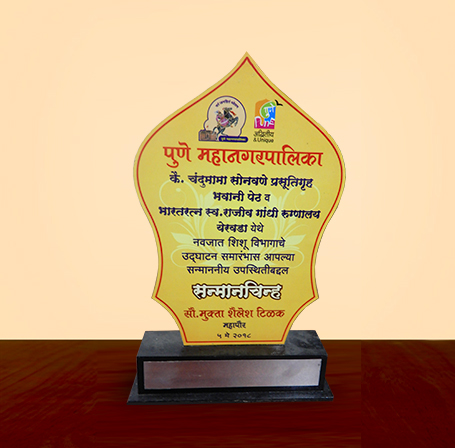
- At Rajiv Gandhi Memorial Hospital in Yerawada, Pune, MMF supported the establishment of a Neonatal Intensive Care Unit at the request of the Pune Municipal Corporation, bringing specialised neonatal care into a public hospital.
- Through Bharati Hospital, medical professionals support physiotherapy, speech therapy, and neurodevelopmental services for children under MMF’s Mission Cerebral Palsy initiative.
For communities already dependent on public facilities, this approach narrows the distance between having a hospital nearby and having meaningful care available there. That distinction matters most when patients have limited money, mobility, or alternatives.
Infrastructure Is Only the Beginning
The real outcome is simple to picture. A patient diagnosed sooner. A premature baby getting specialised care. A woman able to access breast cancer screening. A dialysis patient treated closer to home. This is why healthcare infrastructure development has to be connected to outcomes, not just equipment lists and inaugurations.
The role of healthcare organisations in India isn’t to duplicate government systems. It’s to complement them where specific gaps exist. Public healthcare infrastructure in India can’t be viewed as the government’s responsibility alone. Public systems remain responsible for delivering care, but a strong ecosystem around them helps that care actually reach people.
A hospital department upgraded today can serve patients tomorrow. A NICU established today can care for thousands of newborns over time. A diagnostic machine installed today can support years of early detection. That’s what makes strategic partnerships so central to healthcare infrastructure work: the strongest intervention isn’t always building something new. Sometimes it’s enabling what already exists to finally serve its intended purpose.
Data References
- World Health Organization India, Primary Health Care — the role of primary healthcare infrastructure, integrated services and Ayushman Arogya Mandirs. WHO India — Primary Health Care
- World Health Organization India, Universal Health Coverage — India’s progress on healthcare infrastructure, Ayushman Bharat and access to essential health services. WHO India — Universal Health Coverage
- World Health Organization India, Health Financing India — government and household health expenditure and India’s health-financing context. WHO India — Health Financing
- Comptroller and Auditor General of India, Performance Audit of Public Health Infrastructure and Management of Health Services — assessment of health infrastructure, equipment, human resources and service delivery. CAG India — Public Health Infrastructure and Management of Health Services
- World Health Organization, Bringing Primary Health Care to Remote Populations in Chhattisgarh, India — an example of government and institutional partnership strengthening healthcare delivery in underserved areas. WHO — Primary Healthcare in Chhattisgarh
- Mukul Madhav Foundation, Strengthening Healthcare Infrastructure in India — MMF’s hospital infrastructure, equipment and healthcare partnership initiatives. MMF — Strengthening Healthcare Infrastructure
- Mukul Madhav Foundation, Healthcare — MMF’s wider healthcare work across hospital support, cancer care, cardiac care, training, mother and child care, vision care and other interventions. MMF — Healthcare