Gender Equality
Female Literacy and Women's Empowerment in Rural India : Beyond the Classroom
11th Aug 2026
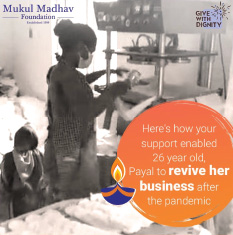
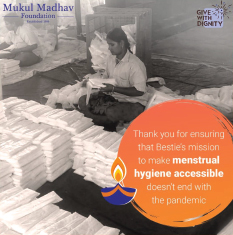
Payal was 20 years old when her father, the family’s main support, lost his fight against cancer. In a household where most young women are still finishing school with someone steadying them, she had no one left to steady her. What she built instead, a low-cost sanitary pad manufacturing unit in her village of Rangiatikra, would go on to give other women a livelihood too. Her story is not really about one girl’s resilience. It is about what happens when a woman is given the skills and the room to rebuild, and how far that rebuilding travels once it starts.
At Mukul Madhav Foundation (MMF), we have learnt that girls’ education is never just about enrolment numbers. It is about removing the everyday obstacles, distance, cost, safety, household duty, that push girls out of school long before anyone calls it a dropout. Educating one girl rarely stays confined to her alone. It moves through a household, then a village, the way Payal’s did, reshaping decisions about health, income and the next generation’s schooling.
The Hidden Cost of an Unfinished Education
Female literacy in India remains marked by a wide gender gap despite decades of policy attention. National data puts male literacy at 84.7% against female literacy at 70.3%, a gap of 14.4 percentage points that widens further once the numbers are read by geography. The women literacy rate in India falls even further behind in rural areas: rural female literacy stood at just 65%, compared to 83% in urban India, an 18 percentage point gap that means where a girl is born still shapes whether she is taught to read. In states such as Rajasthan, Bihar and Uttar Pradesh, that gap climbs past 20 percentage points, driven by early marriage, safety concerns and a persistent preference for educating sons first.
This is not simply an access problem. It is a compounding one. Girls who leave school early marry earlier, have children earlier, and are less able to make informed choices about their own health and their families’ futures.
Where Education Meets Opportunity
The evidence for reversing this is consistent and well documented. Educated women are more likely to participate in the workforce, delay marriage, and invest in their own children’s schooling, creating a generational effect that outlasts any single intervention. Female labour force participation in rural India has already climbed from 37.5% to 45.9% in recent years, a shift closely tied to rising women education in India. Female enrolment now exceeds male enrolment at every level of school education nationally, proof that the barrier is rarely aspiration. It is access.
One insight holds across every state and every programme. Removing a single practical obstacle, a bicycle, a toilet, a nearby skilling centre, often does more to keep a girl in school, or to help a woman like Payal rebuild after it, than any awareness campaign.
Our Work on the Ground
Our approach to girls’ education has grown from listening to what keeps girls out, not simply what brings them in.
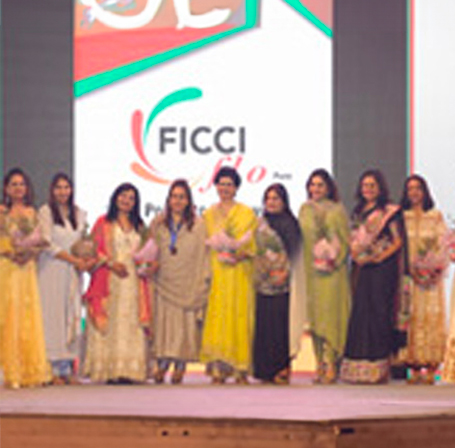
- With FICCI FLO, we distributed 348 bicycles to girl students across 12 states, cutting the commute that too often decided whether a girl reached her classroom at all.
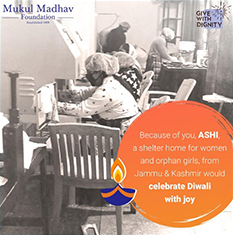
- In Jammu and Kashmir, we partnered with FLO to deliver a women empowerment project for adolescent girls and marginalised women in Budgam district, building skills for economic self-reliance alongside the market linkages needed to use them, the same kind of grounding that let Payal turn a single idea into a livelihood for an entire village of women.
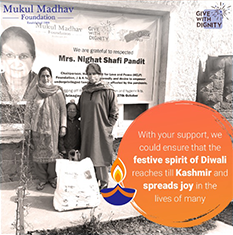
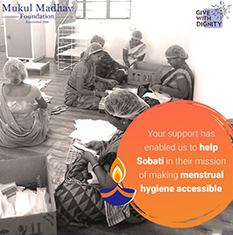
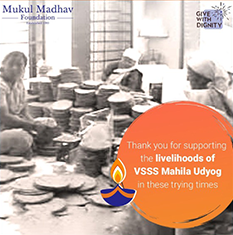
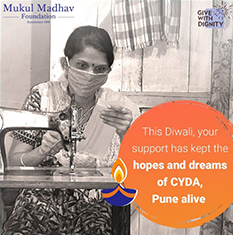
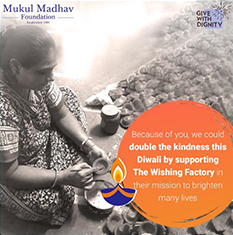
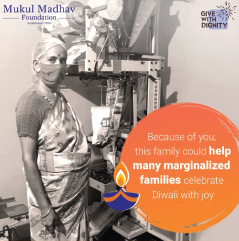
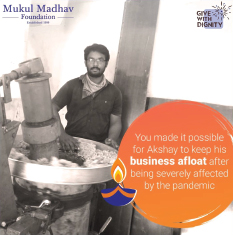
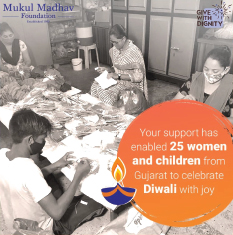
- In Gadchiroli, we have remodelled huts once used to isolate menstruating women into Period Positive Holiday Homes, now supporting over 1,500 women across 18-plus villages with dignity, hygiene and new livelihood skills, the same dignity Payal’s business restored to Rangiatikra, where sanitary napkins reached women who had gone without, even through a pandemic that put her business at risk. MMF stepped in through its Diwali campaign to keep her unit running, and to keep that supply reaching the women who depended on it.
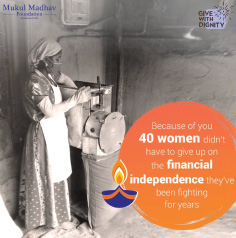
- Our skilling centres in Masar Village, Gujarat, and Ratnagiri, Maharashtra, are among our core women empowerment programs, having supported over 5,000 women and 500 youth with vocational training, financial literacy and legal awareness, the kind of grounding that turns a skill into an income, and an income into independence.
- Through our Aaji Bai Chi Shaala initiative, we extend basic literacy to older rural women, many of whom have relied on thumb impressions in place of a signature their entire lives, a direct answer to what women empowerment in rural India looks like when it reaches the last mile.
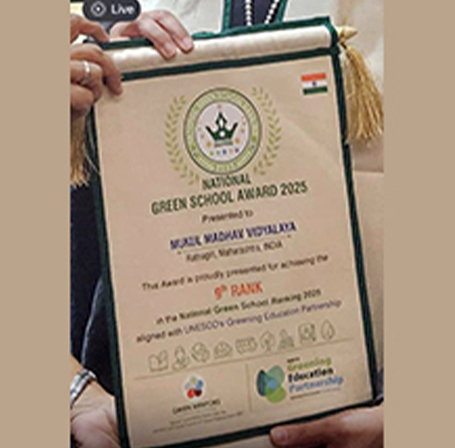
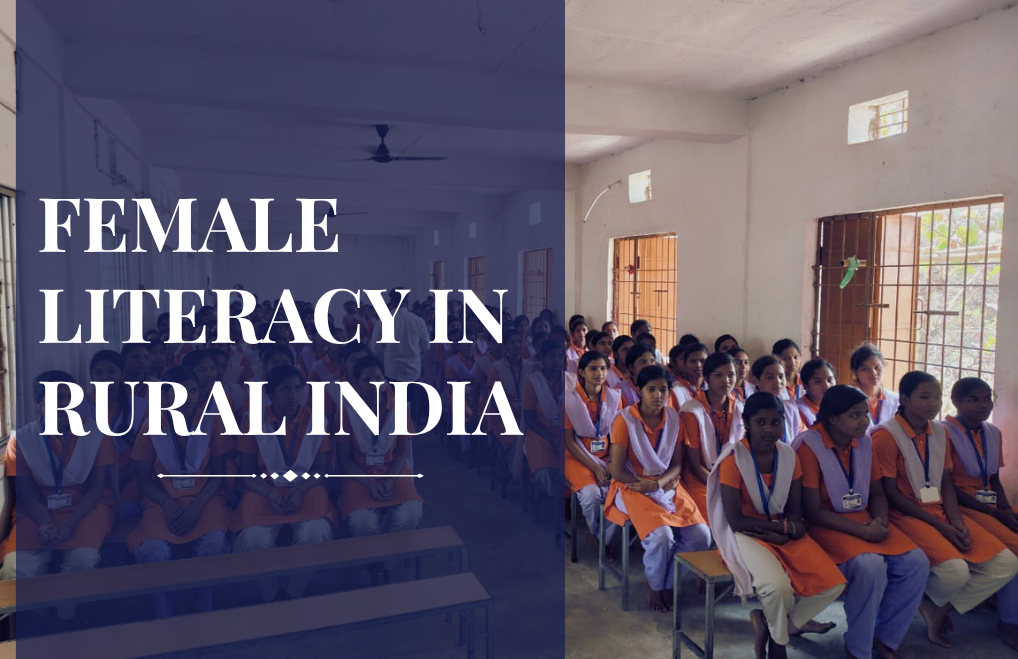
- At Mukul Madhav Vidyalaya in Golap village, Ratnagiri, over 600 students now study from nursery to class 12, many of them girls whose families would once have prioritised a son’s schooling by default, part of the same rural women development effort that begins in the classroom.
A Vision Rooted in Dignity
Across every village we work in, girls’ education is never treated as a standalone target. It is woven into water access, health support and livelihood training, because in a girl’s daily life, these were never separate to begin with. A bicycle that shortens a walk, a holiday home that restores dignity during menstruation, a training centre that turns a skill into an income, each is a small removal of friction between a girl and her future.
The distance between a 70.3% and an 84.7% literacy rate will not close through a single campaign. It will close one bicycle, one training centre and one classroom at a time, the way it did for Payal, until a girl’s school day no longer depends on who else in the house needs her time first.
Data References
- Vision IAS, “Women and Men in India 2025 Report” – https://visionias.in/current-affairs/news-today/2026-04-30/society/ministry-of-statistics-and-programme-implementation-released-women-and-men-in-india-2025-report
- Teachers Institute, “Women’s Education in India: Progress, Challenges, and Policy Interventions” – https://teachers.institute/higher-education-its-context-and-linkages/womens-education-india-progress-challenges/
- 21K School, “Female Literacy Rate in India: Highest & Lowest 5 States” – https://www.21kschool.com/us/blog/female-literacy-rate-in-india/
- News on Air, “Slight increase in rural literacy rate in last fiscal informs Education Minister to RS” – https://newsonair.gov.in/slight-increase-in-rural-literacy-rate-in-last-fiscal-informs-education-minister-to-rs/
- Wikipedia, “Literacy in India” – https://en.wikipedia.org/wiki/Literacy_in_India