Empowering Rural Women Through Livestock Care: Ramilaben’s Journey in Gujarat
7th Jan 2026
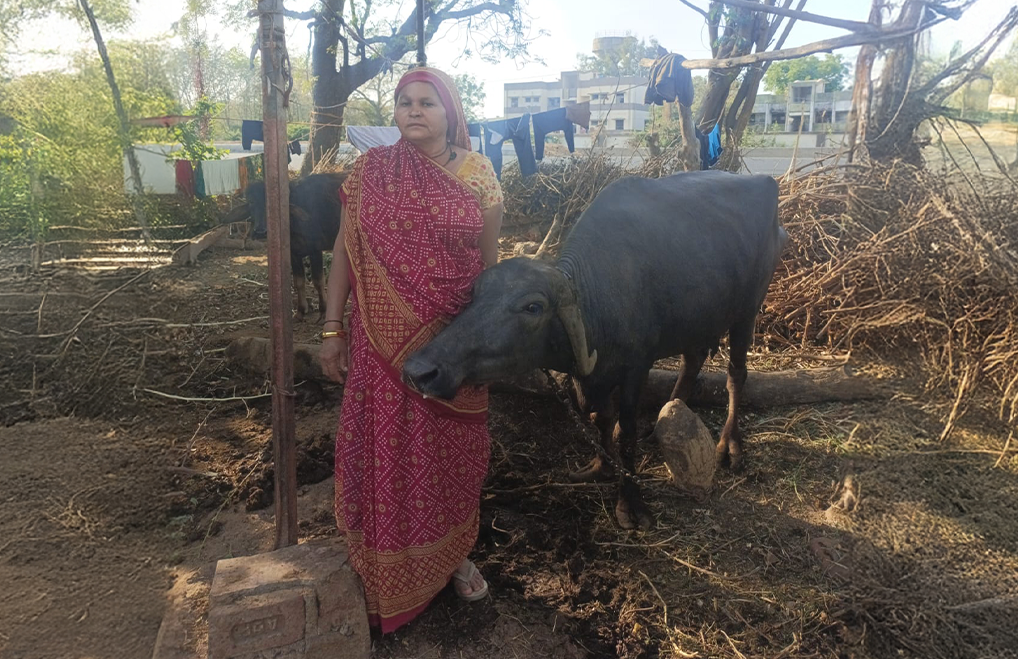
In Gavasad Colony, Bariya Ramilaben Kamleshbhai’s day usually began around her animals. Before other work could start, there was feed to prepare, water to check, and quiet signs to notice. She kept one cow and two buffaloes. It was not a large herd, but it was enough to demand constant attention. Milk sales formed a direct part of the household income, and even a small change in yield could affect how the month unfolded.
For years, breeding decisions were guided by what she had learned from elders and neighbours. Some seasons worked out well; others brought delays and uncertainty. At this point, trained workers began visiting her home as part of a rural development effort by Mukul Madhav Foundation. Ramilaben listened carefully as they spoke about artificial insemination in cows and buffaloes. They spoke about how planned breeding could reduce waiting periods and improve outcomes. She did not rush into it, but agreed to try.
Artificial insemination procedures were performed on all three animals. Each resulted in a successful pregnancy. For Ramilaben, the reassurance came from the sense that something unpredictable had become more manageable.
She also attended training sessions that broke down daily care into clearer steps. Breeding, feeding, management, and health care were discussed as connected steps. This helped her see how cow insemination depended on regular feeding and observation. It was not just about timing.
Over the following months, the changes gradually became apparent. The animals appeared healthier, routines became more consistent, and milk yield increased. Ramilaben could now plan household expenses better. The understanding strengthened her approach to animal husbandry and dairying. Learning about artificial insemination livestock practices shifted her mindset. She watched more closely and made deliberate choices. The work of livestock husbandry still required effort, but it now followed a logic she could rely on.
Ramilaben’s experience was not about rapid growth or dramatic change. It was about recognising the full cycle of care and acting at the right moments. In that understanding, both her animals and her household found greater steadiness.