Healthcare
Cancer Care Beyond Treatment: How Mukul Madhav Foundation Supports Cancer Patients in India
23 Nov 2026
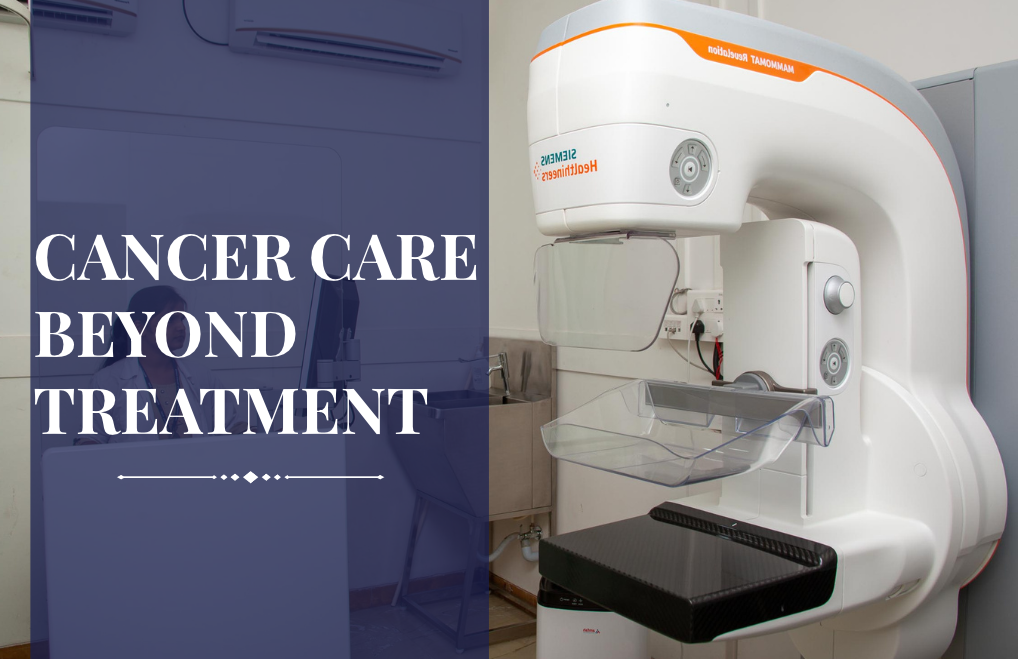
Cancer is one of the most feared words in any household. For many families in India, the fear is not only about the disease itself but about everything that comes with it: the cost of tests, weeks of chemotherapy, long journeys to a hospital and income lost along the way. Too often, illness is dreaded because of what it will cost, not because it cannot be treated.
For 16 years, Mukul Madhav Foundation (MMF), has been working with its CSR partner Finolex Industries Ltd. (FIL), has set out to change this. As an NGO healthcare NGO in India, MMF has supported more than 4,500 patients with chemotherapy, radiation, screening, medicines and surgery, and it responds to appeals from hospitals across the country. Its cancer care work spans the whole journey: detecting cancer early, preventing it where possible, supporting treatment, and making sure patients are cared for with dignity when they need it most. MMF works across 26 states and 4 Union Territories, in line with the 17 UN Sustainable Development Goals, including SDG 3: Good Health and Well-being.
Why cancer care needs more than treatment
How a cancer story ends often depends on when it begins to show its first signs which generally go unnoticed, then when it starts showing its physical signs that is when the camps play an important role. Cancers detected early are generally easier to treat. Yet many people, especially women, put off check-ups because of myths, hesitation, lack of cancer awareness or the simple fact that a hospital is far away or unaffordable.
Treatment costs are only part of the burden. Families also carry the cost of travel and medicines, and caregivers often step back from work to look after a patient. Patient support that reaches families where they live protects quality of life for everyone involved. This is where it is critical that MMF builds hospital partnerships and works with community groups and corporate partners, so that screening, vaccination, treatment support and palliative care reaches those who would otherwise be left out.
Early detection: Cancer screening camps that bring care to women
Cancer screening camps are among the most powerful tools for early detection, and they are where much of MMF’s work begins. Since 2014, MMF has held more than 24 camps in hospitals and community initiatives, supporting more than 5,000 women through awareness and testing.
- Ratnagiri: A mammography machine has been donated to Chirayu Hospital in 2014, and since 2020 MMF has worked with Walawalkar Hospital in Dervan. Its 19th camp on 12 March 2026 screened 250 women. On 21 October 2026, FIL and MMF, with B.K.L. Walawalkar Hospital inaugurated the 20th camp, Sankalp 2026, at Dervan, Chiplun. The programme continued until 3 November, reaching over 250 women across Chiplun, Khed, Guhagar, and Sangameshwar.
Beyond creating awareness and providing healthcare services, the camps also made a meaningful impact through early detection and timely medical intervention. During the health camps conducted in Pune, one case of cervical cancer and five cases of breast cancer were detected, enabling the women to seek further medical care. Similarly, in Satara, a woman with fibrosis was identified and referred to Navale Hospital for surgical consultation and further treatment. These interventions highlight the importance of community health camps in identifying serious health conditions, facilitating timely referrals, and potentially transforming lives through access to essential healthcare.
- Pune communities and workplaces, 2016–17: Camps with Prashanti Cancer Care and Prays Clinic screened 184 women in slum and community settings. In 2017, 167 women police personnel and family members were screened in Shivaji Nagar, and 60 contract workers at the Finolex factory in Urse were screened for oral cancer.
- Satara, 2019: 140 ASHA workers and ANM nurses were screened for breast cancer and trained in self-examination by Prashanti Cancer Care.
- Truck driver camps: MMF screens truck drivers associated with Finolex Industries Ltd. for oral cancer and prostate cancer, using the PSA blood test for prostate screening.
The monthly mammography camp in Pune
As a cancer NGO in Pune, MMF’s main screening effort today is a monthly camp at Bharati Hospital for women above 35, running since January 2024 after FIL donated a mammography machine to the hospital in 2022. Each camp brings several services together in one visit:
- Mammography and sono mammography
- Gynaecologist consultation and pap smear
- Blood tests, including CBC and HIV screening
- Dietician consultation, with blood pressure, height and weight checks
The programme conducted 852 screenings from January 2024 to February 2025 and had reached more than 1,100 women by May 2025.
Awareness sessions now feed these camps. In February 2026, with Yardi Foundation, MMF and FIL reached 115 women in Hadapsar, Padmavati and Shivaji Nagar, and another 25 at Sawargate, of whom 20 registered for the camp. More sessions followed in Prem Nagar and at Bharati Hospital in April and May 2026. One beneficiary group acknowledged that the Bharati camp helped three women detect breast cancer early, a reminder of what a single morning of screening can change.
Prevention: HPV vaccination in Pune schools
The best outcome is to prevent cancer altogether. Human Papillomavirus (HPV) infection is the leading cause of cervical cancer, and vaccination offers real protection.
Since 2024, MMF and FIL have run HPV vaccination drives in Pune schools with Villoo Poonawalla Hospital, which provides medical support, and the Serum Institute of India, which supplies Cervavac, India’s first indigenous gender-neutral HPV vaccine.
- 2024: 50 students at Mahatma Gandhi School in April and 148 at B.T. Shahani School in June. By January 2025, the two-dose schedule was complete for more than 200 children.
- December 2025: after an awareness session for 100 children and parents, 91 students aged 9 to 13 at Mahatma Gandhi School received the vaccine.
- June–October 2026: 90 students aged 9 to 13 received their second dose on 20 June. On 22 October, 32 more children at Mahatma Gandhi School and B.T. Shahani School received second doses. With this, 295 children aged 9 to 14 have been supported under the initiative.
Standing beside families: Medical help for cancer patients
A diagnosis brings a second burden: paying for care. Chemotherapy, radiation, medication and surgery can quickly exhaust a family’s savings, and some patients delay or abandon treatment because they cannot afford it.
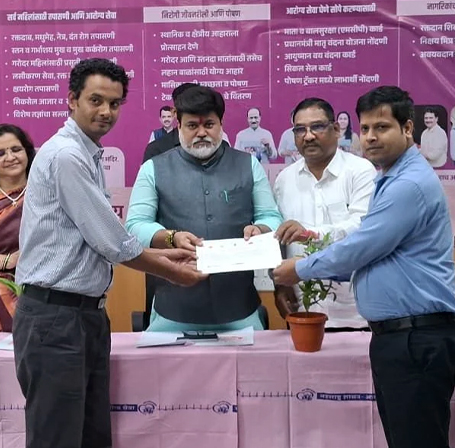
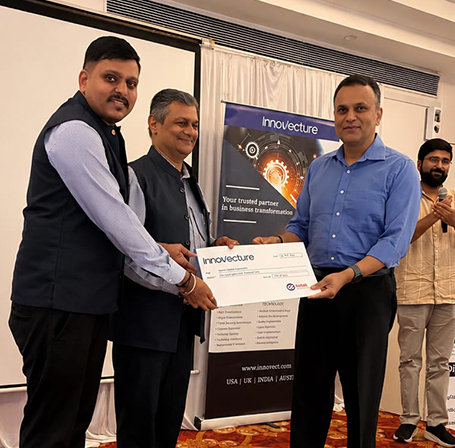
MMF extends financial assistance to underprivileged cancer patients so that treatment decisions are made on medical advice rather than on what a family can pay. This includes full treatment for 19 patients with leukaemia at Bharati Hospital, and support since 2019 for five women with breast cancer at P D Hinduja Hospital. In July 2026, Innovecture Pvt. Ltd. presented a cheque of ₹1,85,000 to support cancer patients.
Food is part of care as well. With Sahayahasta Trust in Bangalore, MMF provides monthly rations to 42 people affected by cancer and HIV, after verification and due diligence.
Dignity when it matters most: palliative and home-based care
Not every cancer story ends in recovery, and oncology care does not end when a cure is no longer possible. Palliative care focuses on comfort, pain relief and dignity for patients and support for their families.
In Rishikesh, MMF’s support to Ganga Prem Hospice includes a home-care vehicle, monthly medicines for 20 patients over the last two years (continuing today), and the construction of the Finolex Wing, inaugurated on 28 November 2024.
In Kanyakumari district, Tamil Nadu, MMF and FIL signed an agreement with Sreeram Cancer Trust. A fully equipped vehicle with trained staff provides door-to-door palliative care for bedridden patients who face physical and financial constraints. This is rural healthcare at its most personal: the programme is set to reach 65 villages across two talukas, Rajakkamangalam and Thovala, and has supported more than 250 patients since 2023. The partnership was renewed in April 2026. Read more about rural healthcare in India.
How you can help cancer patients in India
Cancer care is a shared effort, and everyone has a role to play:
- Get screened and spread the word. If you are a woman above 35, talk to a doctor about regular check-ups, and share what you know with the women around you.
- Vaccinate early. Ask your paediatrician about HPV vaccination for adolescent girls.
- Support a patient. A cancer donation in India can help cover the cost of treatment, medicines or palliative care. You can donate to support cancer patients.
- Partner with us. Organisations that want to make a lasting difference through CSR can work with MMF to extend these programmes to more communities.
A journey, not a single moment
From a screening camp in Pune to a home-care vehicle in Kanyakumari, the work of MMF, an NGO that helps cancer patients, reflects a simple belief: no one should face cancer alone, and no family should be pushed into hardship because of it. Real people, lasting change happens when early detection, prevention, treatment support and compassionate care come together for patients, survivors and the caregivers beside them.
To learn more about MMF’s healthcare initiatives or to support the cause, visit mmpc.in.
This article is intended for awareness and does not replace medical advice. Please consult a qualified doctor about screening and treatment.