Environmental Sustainability
Rooted in Equity : How Sustainable Development Initiatives are Transforming Rural India
15th June 2026
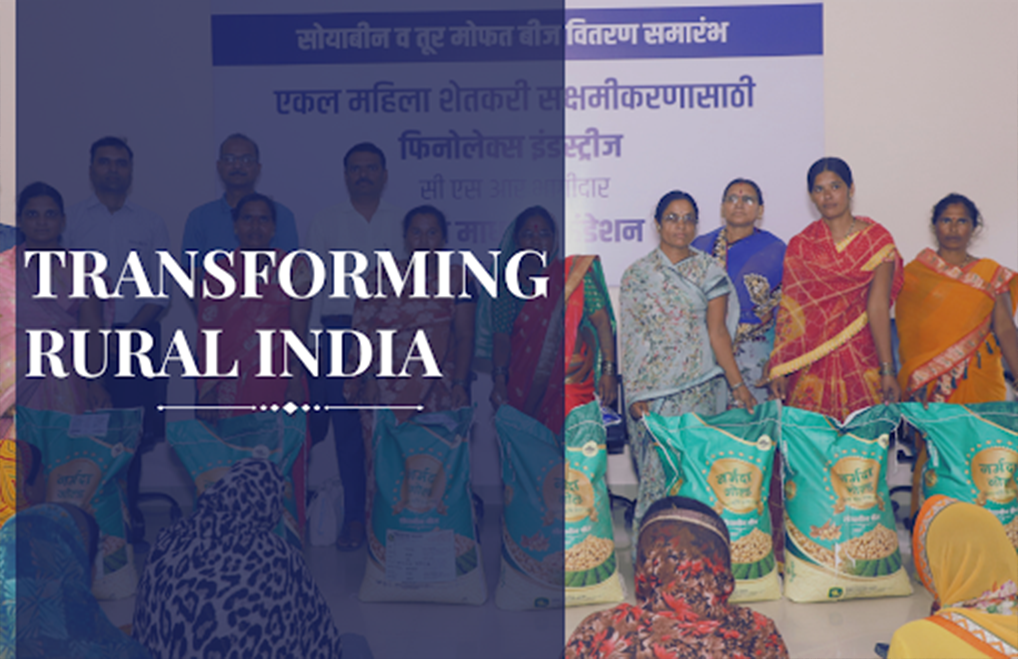
In the villages that mark India’s agricultural heartland, the rhythm of life is inseparable from the land. A good monsoon means a decent harvest; a failed one can unravel years of modest progress. For hundreds of millions of people in rural India, prosperity is not a given — it is something that has to be built, season by season, through access to water, knowledge, and opportunity.
At Mukul Madhav Foundation (MMF), we believe sustainable rural development is not a question of charity, but a question of equity. It requires a holistic, resilient approach together, not separately.
The Scale of the Challenge
Despite decades of policy attention, the gaps in access to basic resources across rural India remain significant. Clean water, reliable power, decent housing, and stable income are still unevenly distributed — and in many regions, geography and infrastructure conspire to keep communities on the margins of progress. For families in these areas, the distance between a government scheme and actual benefit can be as wide as the distance to the nearest town.
The Government of India has responded with intent. National Rural Employment Guarantee Act (NREGA) guarantees 100 days of wage employment to rural households. PM Kisan Yojana, Swach Bharat Mission – Gramin (SBM-G), Jal Jivan Mission (JJM), Deendayal Antyodaya Yojana – National Rural Livelihoods Mission (DAY-NRLM) builds community institutions for rural women. Pradhan Mantri Awas Yojana – Gramin (PMAY-G) had completed over 2.92 crore homes as of December 2025.
These are meaningful commitments, and the scale of investment is real. But government infrastructure cannot reach its potential without complementary community-level action.
Water as the Foundation
Of all the variables shaping rural livelihoods, water is the most foundational. Climate-resilient agriculture is not possible without reliable water management for agriculture, and in rain-dependent farming communities, the margin between sufficiency and scarcity is thin. When the rains fail or arrive unevenly, it is rarely the land that gives up first — it is the family depending on it. Watershed development programmes which restore water tables, reduce soil erosion, and replenish local water bodies are among the most effective long-term investments any community can make.
We have been working in this space since 2007. Our water conservation projects span Maharashtra and Gujarat, encompassing cement nala bunds, desilting of percolation tanks, river rejuvenation, rainwater harvesting, and pipelines extending access to remote areas. The cumulative effect is visible in regions that once faced recurrent drought: deepened reservoirs, recovered water levels, and agricultural seasons that are no longer entirely hostage to the monsoon.
Farmer Support and Sustainable Livelihoods
Water security creates the conditions for the sustainable agriculture India needs at scale — but water alone is not enough. Farmers also need quality seeds, modern techniques, soil knowledge, and connections to markets where they can sell what they grow. Without market access, improved productivity simply means unsold surplus.
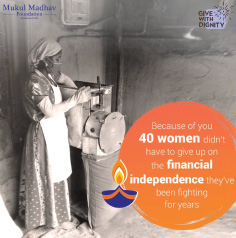
We collaborate with agricultural institutions to help farmers optimise irrigation and adopt techniques that increase yield without depleting the land. Initiatives include betel nut cultivation training, skill development for widowed women farmers in Osmanabad, and beekeeping training for tribal women. Nearly 60% of the 424 widowed women farmers we have supported in Osmanabad have become self-reliant — a shift in autonomy as much as income.
Integrated Village Development
Sustainable rural development, at its most effective, does not address one problem at a time. A village without sanitation or functional roads will struggle to retain any gains made in agriculture or education. This is why we have adopted more than 15 villages across India, working simultaneously across sanitation, water, electrification, education, healthcare, and income generation for women and youth.
Research supports this integrated approach. A peer-reviewed 2024 study found that 65% of SDG targets require active local engagement to be met, and that grassroots participation through village councils, self-help groups, and community institutions is essential for making development gains durable.
Ecological Responsibility
Climate resilient agriculture and long-term community development are inseparable from conservation. We have planted 18,678 trees across Maharashtra and Gujarat, each a contribution to reversing the environmental pressures that made farming more vulnerable year by year.
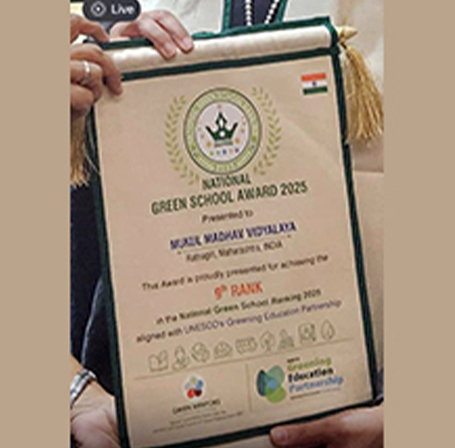
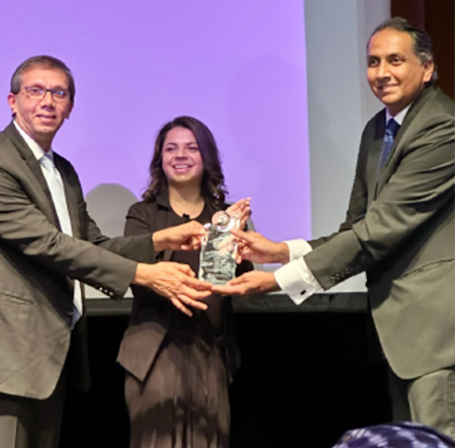
Mukul Madhav Vidyalaya received the National Green School Award in September 2025, being recognised for rainwater harvesting, solar energy use, eco-friendly construction, and environmental education — reflecting our belief that the next generation must practice sustainability, not simply inherit its consequences.
A Vision Grounded in Dignity
The work of sustainable rural development is, at its core, about people. A farmer who no longer watches a dry well determine his family’s future. A woman in Osmanabad who owns her land, earns her income, and makes her own decisions. Children who inherit not hardship, but possibility.
At MMF, we believe rural India deserves nothing less. And across 28 years of working towards it, we have found that this work naturally touches each of the 17 UN Sustainable Development Goals. Not by design, but by necessity, because when equity is the goal, everything else follows.
Reading Sources
- Ministry of Rural Development, Government of India – Empowering Rural Communities: Flagship Schemes Driving Growth (PIB Press Release, February 2025) https://www.pib.gov.in/PressReleasePage.aspx?PRID=2098540®=3&lang=2
- Kali Charan Rath & L. P. Panda – Empowering Rural India: Localizing SDGs for Community Development, International Journal of Academic Research and Development (IJARD), January-June 2024 https://bhartiijard.com/volume/10/issue/1/empowering-rural-india-localizing-sdgs-for-community-development/pdf