Give With Dignity
From a Single Donation to a Lifetime of Change: The MMF Approach to Social Impact in India
22 Sept 2026
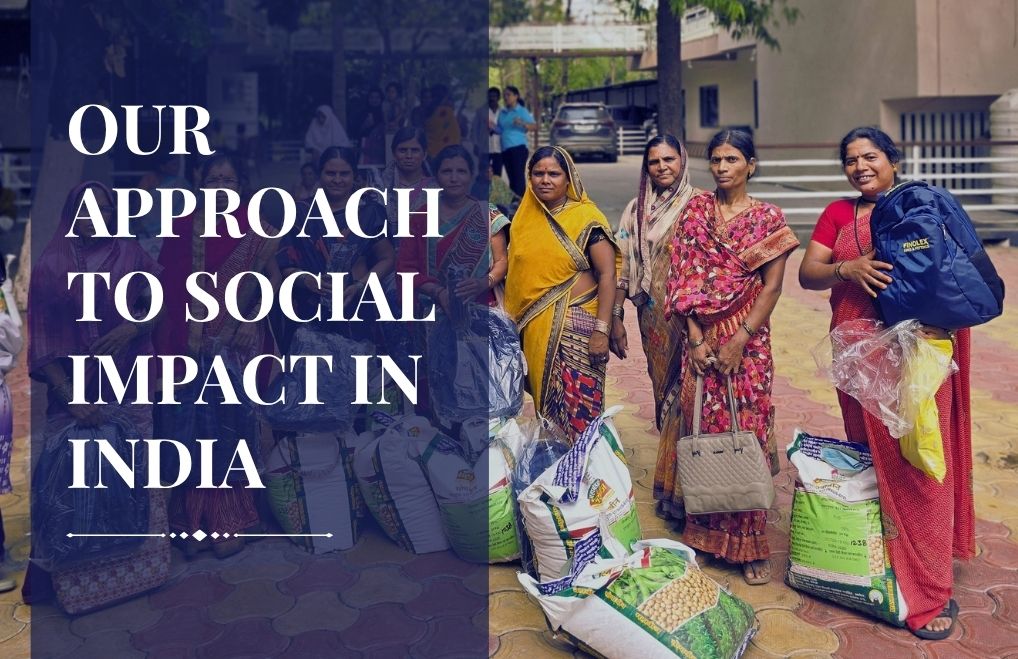
At Mukul Madhav Foundation (MMF), we believe social impact begins with understanding people, not simply identifying problems. Our work across healthcare, education, water conservation, livelihoods and community development is designed around the needs of beneficiaries and the different stages of their lives.
A donation, in this context, is not an isolated transaction. It becomes part of an intervention that can support a person, a family or an entire community over time.
A woman in a village in Ratnagiri, for instance, may once have walked two kilometres each day to fetch water for her family. A water conservation project can change that equation. A borewell is dug. A check dam is built. Irrigation becomes possible. The time once spent walking for water can instead be spent working, caring for a family or building an income.
This is the way we look at philanthropy at MMF: the beneficiary comes first, and the intervention is designed around what can create lasting change in their lives.
Beneficiary-Led Interventions That Create Long-Term Impact
The needs of a community are rarely limited to one issue. Access to water affects livelihoods. Education affects future income. Healthcare affects a family’s ability to remain economically secure. Skills can determine whether a woman can build an independent livelihood.
Our interventions therefore work across these interconnected needs.
Our Work on the Ground
Water conservation: Through our water conservation projects across Maharashtra, including the Sautada initiative in Beed district, we support borewells, check dams and irrigation systems that address the long-term water needs of communities. A donation to charitable trust work can therefore become infrastructure that continues serving families well beyond the initial project.
Education scholarships: Our scholarships support students from agriculture colleges in Maharashtra through higher education and, in some cases, postgraduate opportunities at institutions such as University College London. A decision to donate to NGO work can become part of a student’s longer academic and professional journey rather than ending with a single academic year.
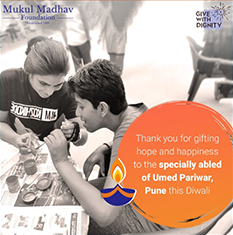
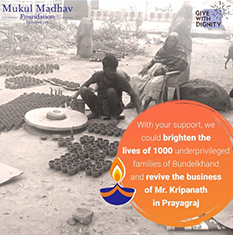
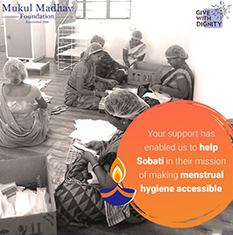
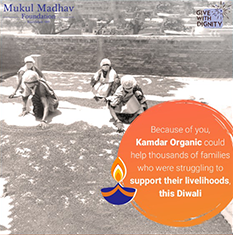
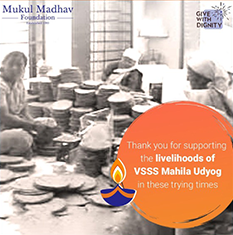
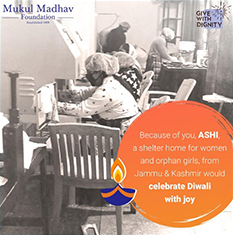
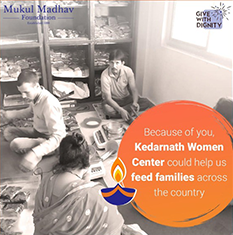
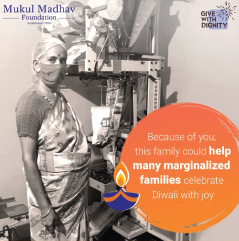
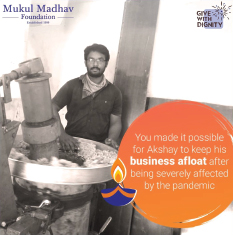
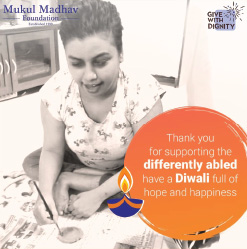
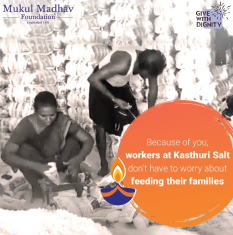
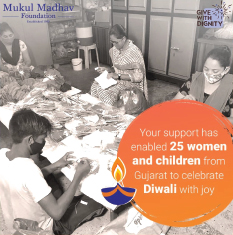
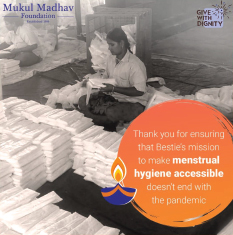
Give With Dignity: Through our pan-India mission, we have supported over 70,000 families across 24 states with grocery and hygiene essentials sourced locally. The intervention addresses immediate needs while also helping direct spending towards businesses within the communities being served. In this way, charitable donations can address an immediate requirement while supporting local economic activity.
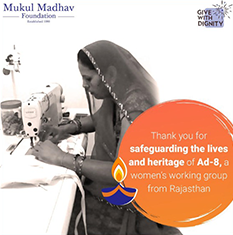
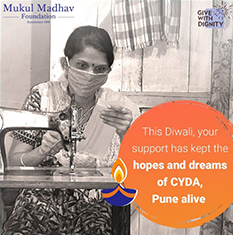
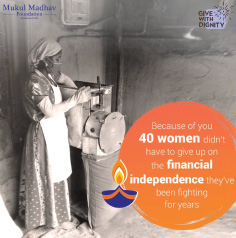
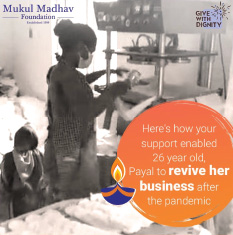
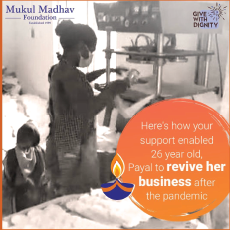
Women’s livelihoods: Our livelihood programmes, including vocational training centres in Masar Village, Gujarat, and Ratnagiri, Maharashtra, focus on building skills that can translate into independent incomes. The objective is not simply to provide assistance today, but to create an opportunity for greater economic independence tomorrow.
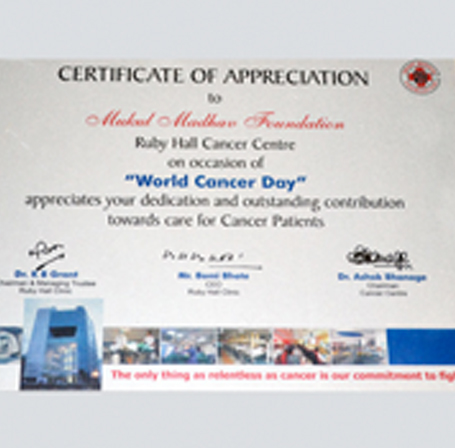
Healthcare infrastructure: In collaboration with KEM Hospital, Pune, we helped establish its Children’s Ward, including Pune’s first PICU, while our mammography camps support early breast cancer detection. These interventions demonstrate how non profit donations can contribute to healthcare infrastructure and services that continue benefiting communities over time.
Supporting People Across the Stages of Life
Taken together, these interventions form something larger than individual projects. They allow MMF’s work to reach beneficiaries at different stages of life.
It can begin with healthcare at birth and during childhood. A child receiving critical care in a hospital needs more than a single moment of medical attention. Healthcare infrastructure creates the capacity to support children when they need it most.
As that child grows, education becomes central. Access to schooling, scholarships and higher education can determine the opportunities available later in life.
As young people enter adulthood, the focus can shift towards skills, employment and livelihoods. For women in particular, vocational training and income-generation opportunities can create a pathway towards greater financial independence.
At the family and community level, interventions such as water conservation, local livelihoods and community support address the conditions that shape whether people can remain secure and resilient.
This is why our work cannot be viewed only through individual donations or individual projects. The same person can have different needs at different points in life, and the wellbeing of an individual is often connected to the wellbeing of the family and community around them.
This is how MMF looks at social impact: from birth through the different stages of life, and from individual needs to the wider community around them.
Why Long-Term Presence Matters
India has no shortage of people willing to give. According to the Charities Aid Foundation’s World Giving Index, around 184 million Indians donate to charity regularly.
The question, therefore, is not simply how much India gives. It is what happens after the giving.
It is easy to donate money to charity towards an immediate need. But lasting impact requires continuity: following up on a project, tracking a student’s progress, supporting skills development and understanding whether an intervention is actually changing the circumstances of the people it was designed to serve.
This is also where NGO donations can become more than short-term relief. A donation can fund an immediate requirement. Sustained intervention can help create an asset, a skill, an income or an opportunity that continues working long after the original contribution has been made.
For organisations working closely with communities, that long-term view is essential. It means understanding local needs, maintaining an on-ground presence and staying involved beyond the initial intervention.
From Donation to Long-Term Impact
The impact of philanthropy is ultimately measured by what remains after the initial donation has been made.
A water project should continue serving a village. A scholarship should contribute to a student’s future. A livelihood programme should help create the possibility of sustained income. Healthcare infrastructure should continue serving patients long after it is established.
This is why ngo fundraising cannot be measured only by how successfully a campaign raises money. The more important question is what that funding makes possible after the campaign ends.
At MMF, every intervention is an opportunity to build something that can last: a stronger community, a better opportunity, a more secure livelihood or access to essential services.
The goal is not to create permanent dependence on donations. It is to support people and communities towards greater stability and independence.
From a child’s first experience with healthcare to a student’s educational journey, from a woman’s livelihood to a village’s access to water, our work follows the needs of beneficiaries across the stages of life.
That is what turns a donation from a single transaction into long-term social impact.
Data References
- Dasra & Bain & Company, India Philanthropy Report 2025 — social-sector funding, private philanthropy and India’s funding gap. India Philanthropy Report 2025
- Dasra, India Nonprofit Report 2026 — the scale, operating realities and emerging needs of India’s nonprofit sector. India Nonprofit Report 2026
- GivingTuesday India, UDARTA:EG — research on everyday giving and the role of individual and collective philanthropy in strengthening India’s social sector. UDARTA:EG Report
- Mukul Madhav Foundation, Education — education infrastructure, scholarships, rural education and skilling initiatives. MMF Education
- Mukul Madhav Foundation, Scholarships — institutional and individual scholarship programmes across India. MMF Scholarships
- Mukul Madhav Foundation, Skills & Livelihoods — current skilling, livelihood and community development initiatives. MMF Skills & Livelihoods